

Key Points:
- Arugam Bay is a top destination for a surf and remote work lifestyle with a great community. * The cost of living is affordable for digital nomads, with local SIM cards costing around $US 10, and cheap local food options.
- The availability of co-working spaces makes it a place to work remotely in Sri Lanka.
Falling in Love With Arugam Bay: Surf Travel Meets Remote Work
After more than 1.5 years of traveling, I flew back to my home country in Germany for a short break. But it didn’t take long until I knew exactly where my next trip would lead: Sri Lanka. The island had already shown up on my route to Asia and Oceania several times, but for one reason or another I always ended up skipping it.
About two years ago I started surfing, and ever since then, everyone kept telling me how ideal Sri Lanka is for surfers. Warm water, friendly locals, and waves for every level. So this time there was no hesitation. I didn’t even apply for a visa in advance; I simply got my Visa on Arrival, grabbed my backpack, and committed fully to this new adventure.
The moment I arrived in Arugam Bay, I fell in love immediately. There’s something special in the air – a mix of raw coastline, surf culture and an international community that makes you feel at home right away. You can instantly feel how different this town is compared to many other destinations in Sri Lanka. It has become one of the biggest hotspots for surf travel for remote workers, blending sunrise surf missions with laptop time in beach cafés and relaxed evenings by the ocean.
Since I now fully live the surf and remote work lifestyle myself, Sri Lanka was the perfect place to explore. I focused mainly on the coastal regions where the waves and the energy are – with a short detour to Ella and Kandy to enjoy the mountains and cooler climate. But Arugam Bay quickly became the place that truly captured me and as a digital nomad surfer.

Living Costs & Food in Arugam Bay
Moving freely by Tuk Tuk
When I landed in Colombo, I immediately bought a local SIM card at the airport for around $US 10 (50 GB) and stayed just one night in the city. I wanted to get moving as fast as possible. The next morning, after getting my Sri Lankan driving license, I rented a tuk-tuk for the entire month. It cost me about $US 450, which at first felt like a big expense – but honestly, it turned out to be one of the best decisions of my whole trip. Having my own tuk-tuk gave me complete freedom and made it super easy to explore different beaches, villages, and even nearby surf spots with coworking spaces. For anyone who loves flexibility and enjoys discovering places spontaneously, I can’t recommend it enough.
Accommodation: Finding a Home by the Beach
When I started looking for accommodation in Arugam Bay, the prices surprised me. For an Asian country, they were definitely on the higher end, especially during the season. But I got really lucky and found a brand-new homestay that had just opened. It was simple but clean, cozy, and run by an incredibly friendly family. I paid $US 8 per night, and it was only a 5-minute walk to the beach – perfect for my routine and for keeping my digital nomad surfing budget reasonable. Everything I needed was within walking distance, which made life super easy.
Food: Local Flavors and Cultural Delights
Food quickly became one of the highlights of daily life in Arugam Bay. Local Sri Lankan dishes were not only affordable, but full of flavor and deeply rooted in the culture. Small, family-run places served fresh meals from early morning until late at night.
Kottu became one of my absolute favorites — especially the chicken-and-cheese version with vegetables. It is the ultimate meal to enjoy after a long session in the water. Eating locally is one of the best budgeting tips for surf travelers in this region.
-> Read our full article on how much it costs to live and work in Arugam Bay.
Best Places to Work Remotely in Arugam Bay
Cafés & Coworking Spots
Western-style cafés like Bay Vista Hotel Café offered a different atmosphere and naturally turned into meeting points for surfers and remote workers. Breakfast often blended into work sessions, with laptops open, conversations flowing, and a relaxed pace that felt very different from traditional co-working spaces.
In my experience, Arugam Bay Coworking Center stood out as the most reliable option in town for digital nomads. It was the best place to work remotely in Arugam Bay, offering a more structured setup, dependable Wi-Fi, and a calm environment compared to cafés and guesthouses.
Internet Quality & Wi-Fi
Sri Lanka is slowly making its mark as a digital nomad destination, and Arugam Bay reflects this emerging vibe. It currently only has 3–4 dedicated coworking spaces, meaning that cafés and guesthouses naturally serve as work hubs, offering Wi‑Fi, power outlets, and a relaxed setting for remote work between surf sessions.
The internet in Arugam Bay varies by location and time of day. Some days are slower, others fairly stable, and overall it’s generally reliable enough for video calls and file uploads.
That said, working as a video editor in Arugam Bay had its challenges, especially with downloading large files due to limited internet. It taught me to be flexible and patient. For most remote work, like online marketing or general freelancing tasks, working from Arugam Bay is manageable, and I could still communicate with clients and handle daily responsibilities without major issues.
Power Cuts & Flexibility
Occasional power cuts did happen, especially during hotter days or in the afternoons. Most were short and quickly resolved, but they were a reminder that working remotely and surfing in a small surf town requires a bit of flexibility. Planning work around surf sessions, keeping devices charged, and having a few reliable cafés or guesthouses made it easy to adapt without much disruption.

Surfing in Arugam Bay
Finding Calm Amongst the Crowds
I rented my surfboard on a weekly basis, which made it easy to stay flexible and surf whenever conditions lined up. During my first days in Arugam Bay, I set my alarm for 5:30 AM every morning because I wanted to be the first one in the lineup. Surprisingly, even at that time there were already at least 10 surfers in the water and it only got busier as the sun came up.
Surfing directly at Main Point quickly lost its charm for me. With so many people fighting for the same wave, the fun was pretty limited, and I honestly couldn’t understand how some surfers managed to enjoy the chaos. I had already spent a lot of time surfing in Weligama and Hiriketiya, so I knew what crowded waves felt like but Arugam Bay was on a completely different level.
Journeys to Remote Surf Spots
After a few mornings of trying, I realized I needed alternatives. I started exploring the more remote breaks outside town, like Peanut Farm and Elephant Rock, which were only a 15-minute tuk-tuk ride away. They were definitely better, but even there, surf schools filled the lineup pretty fast.
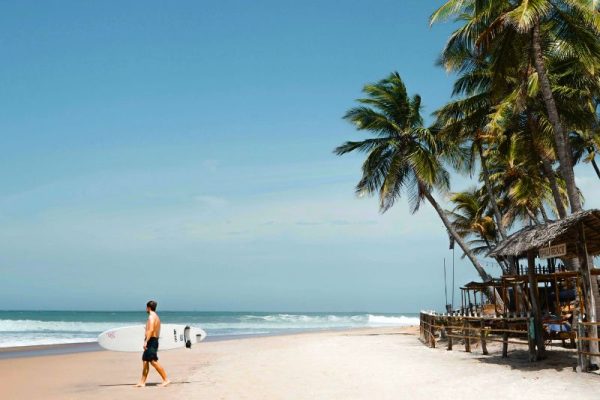
What truly changed my experience was discovering Lighthouse, a spot about 40 minutes north of Arugam Bay. The moment I paddled out, I knew this was the place for me. Almost no people, long peeling waves, and a calm, open lineup where everyone respected each other. Most days, we were just five surfers sharing the waves – the complete opposite of Main Point.
I spent most mornings and afternoons out there, soaking up the quiet and the beauty of the coastline before heading back to town. Finding these calmer, more authentic surf spots was one of the unique experiences for a surf nomad around Arugam Bay.
Top Surf Spots in Arugam Bay:
Main Point – Arugam Bay’s most famous wave and one of the most crowded. A powerful, consistent reef break best suited for confident intermediate to advanced surfers who don’t mind competing for waves.
Peanut Farm – A more relaxed alternative just outside town. This reef break offers playful sections and more space than Main Point, though surf schools can still fill the lineup during peak hours.
Elephant Rock – Often recommended for beginners due to its mellower take-off zones. Still a reef break, but more forgiving in the right conditions. Crowds can build up quickly.
Lighthouse – My personal favorite. A long, peeling reef break with far fewer surfers and a calm, respectful lineup. Despite being part of the Arugam Bay area, it still feels a bit like a secret spot – quiet, raw, and refreshingly removed from the crowds. Best suited for intermediate surfers looking for flow, space, and consistency rather than hype.
Balancing the Nomad Surf Life
Losing My Work Rhythm
With all the chaos of chasing waves and trying to find the right surf spots, my entire work rhythm started to fall apart. I had a few days where I barely worked at all — sometimes not even a single hour. At first, I felt a little guilty, but looking back, it was probably the best thing I could have done for my surf and remote work lifestyle.
Taking a break, disconnecting for a moment, and actually enjoying Sri Lanka without constant pressure made the whole experience so much richer. It also reminded me that flexibility is a key part of remote work in surf towns for digital nomads. Balancing work and surf wasn’t always easy, but it taught me to prioritize, plan ahead, and enjoy the little moments, which ultimately made the trip unforgettable.
Culture, Community & Lifestyle
Arugam Bay has a unique energy that’s hard to explain until you experience it yourself. The town attracts surfers, digital nomads, yoga teachers, creatives, and slow travelers from all over the world. Connections happen naturally over breakfast after a sunrise surf, during sunset walks on the beach or while working in a café.
Life here follows a simple rhythm shaped by tides and daylight. Mornings start early, afternoons slow down, and evenings are calm and social without feeling rushed. It’s easy to fall into a routine that feels balanced, grounded, and refreshingly human.
Safety & Getting Around
Throughout my stay, Arugam Bay felt very safe. Locals were welcoming, helpful, and genuinely curious without being intrusive. Even when driving my tuk-tuk longer distances or returning late in the evening, I never felt uncomfortable.
When it came to my belongings, I had a simple routine that worked well for me. On most days, I dropped my things off at the surf rental before picking up my board, since it was on the way and I knew my items were safe there. On days when I went further out of town, I would lock my valuables in the tuk-tuk and leave the key somewhere discreet. I’ve always trusted this approach – maybe a bit of a personal quirk because so far it has never failed me, and I’ve never had anything stolen.
Beyond Surfing: What Else to Do?
Beyond surfing, Arugam Bay offers plenty of ways to slow down and recharge. Yoga, breathwork, and meditation sessions are easy to find and naturally blend into the laid-back rhythm of the town. Traditional massages are also widely available and quickly became part of the routine – perfect for recovering after long surf sessions and spending hours in the water.
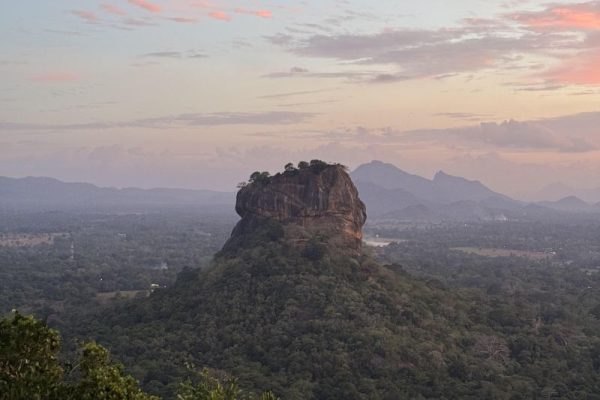
On days without surf, day trips to nearby beaches and lagoons offer a change of scenery and a chance to explore the quieter side of the coastline. Climbing Elephant Rock for sunset – a simple hike rewarded with panoramic views and a moment to pause as the day winds down.
Back in town, wandering along the main road, browsing small local shops, and discovering handmade pieces or surf essentials added another layer to daily life in Arugam Bay.
Final Thoughts
My time in Arugam Bay turned into a memorable chapter of my travels – not because everything was perfect, but because everything felt real. The early mornings in the lineup, the long rides to empty waves, the calm moments after sunset, and the welcoming digital nomad surf community all came together to create a rhythm that felt genuine and grounding.
Even though my work routine shifted and my days didn’t always go as planned, I learned something far more valuable: finding balance as a surf nomad isn’t about strict schedules – it’s about tuning into the energy of a place and allowing yourself to flow with it. Arugam Bay makes this surprisingly easy. Between the coastline, the people, the surf culture, and the slower pace of life, you naturally find yourself reconnecting with what matters.
If you’re searching for a destination where you can surf, work, grow, and breathe all at once, Arugam Bay offers exactly that – a place where adventure and calm coexist, and where every day reminds you why this lifestyle is worth choosing.
-> Going to the South Coast of Sri Lanka? Read our Top 5 Surf Spots for Digital Nomads