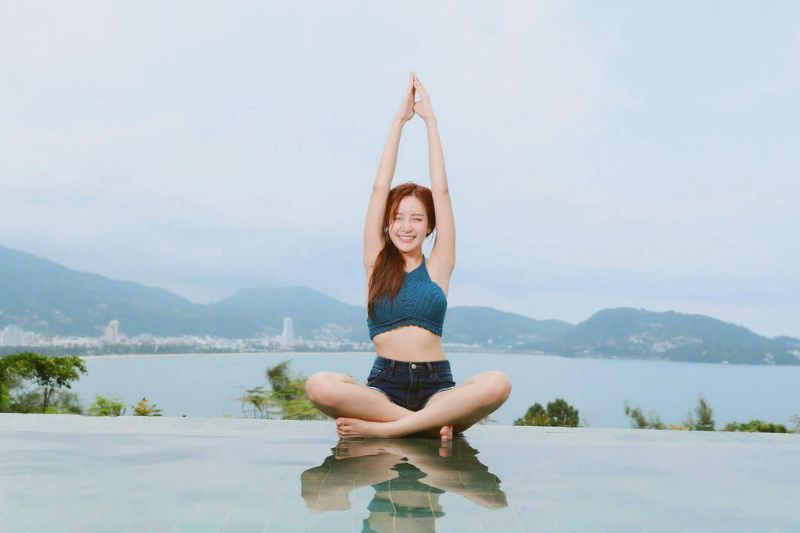


Yoga is the ultimate surf and remote work lifestyle hack. By integrating just 15 minutes of stretching into your daily routine, you can increase paddle power, speed up your pop-ups, and ensure you stay injury-free for the next swell.
Why Yoga Is Essential for Surfers
Anyone who has been surfing for long enough can tell you that the physical demands of the sport can take a toll on your body. The paddling, pop-ups, rotations, and impact of wipeouts can make us stiff, sore, and even cause injuries. For those of us balancing a career and chasing waves, sitting at a laptop all day only adds to that tension.
Practicing yoga is one of the best ways to stay healthy while traveling and surfing. Whether it’s a quick warm-up before your session or a deep recovery flow after work, yoga helps build the small stabilizing muscles that protect your joints. It’s not just about flexibility; it’s about building a sustainable surf and remote work lifestyle so you can keep charging.
Yoga is its own sport. However, when it comes to surfing, it could benefit us to view it as a complement to surfing. Not something that replaces surf fitness completely, but rather a practice that goes hand in hand with surfing, especially if we want to increase performance and decrease chances of injury.
And why is it the perfect addition to your life? The beauty of yoga lies in the fact that its practice is flexible. You can do yoga for an hour, 20 minutes, or even a quick 5 – depending on what parts of your body you want to target and what you want to work on. This is especially perfect for digital nomad surfers who have limited windows for surfing in between online work sessions. Just a bit of stretching, breath work, and bringing awareness to the body before or after surfs can create benefits that go a long way in your surfing.
Common Surfing Injuries and How Yoga Helps
The most common injuries in surfing involve the knee, neck, and back. Working remotely and surfing often means we go from a hunched-over laptop position straight into a deep arch while paddling. Paddling and long sessions can strain the lower back, shoulders, and neck. Wipeouts can cause whiplash, impact the joints, and cause stiffness. Popping up can tighten the hips, and doing manoeuvres on waves can work the knees.
Thus, strength and mobility training, next to dynamic stretching, are essential practices to do next to surfing to maintain performance, health, and avoid injuries. This is where yoga enters.
The Best Types of Yoga Practices for Surfers
There are many types of yoga practices out there. There are ones that prioritise breath work, deep stretches, fast movement, and slow transitions, all of which can benefit your surfing body and mind in one way or another. Below are a few of the most common practices:
1. Vinyasa Yoga
This is a flow-based practice that includes dynamic movement linked with the breath. At first, it is energising, and by the end is deeply relaxing. It mimics surfing’s constant transitions as you move through poses with every exhale and inhale. For surfers, this type of yoga is especially beneficial for mobility, endurance training, and coordination, as tons of balance is involved, as well as strength when moving from one pose to another. It reflects the unity and flow of all aspects of surfing (paddling, popping up, riding the wave, and connecting manoeuvres).
2. Power Yoga
This type of yoga builds on physical strength – it’s challenging and physically demanding. When utilising it for surfing, power yoga can be particularly helpful for building strength in the legs, shoulders, and core muscles, which will help you with your paddle power, pop-ups, and rotations. Strengthening and building on these muscles, as well as their smaller supporting muscles, can aid in more powerful and more efficient surfing. This can help speed up pop-ups, deepen duck dives, and also lend to increased board control and release when making turns and pushing into waves.
3. Yin Yoga
Yin Yoga, on the other hand, allows you to focus on long-held passive poses. Because of the deep stretching nature of this type of yoga, it is an ideal practice for recovery days and rest days in between swells. With yin yoga, you can target joint health and mobility, which increases flexibility and leads to better balance, movement in the water, and injury prevention. Further combined with deep breathing, this type of yoga is extremely calming for the nervous system – creating a perfect balance of peace for after adrenaline-filled surf sessions.
Key Yoga Poses Every Surfer Should Practice
Here are a few beginner-friendly yoga poses to try out pre- and/or post-surf.
Upper Body & Paddle Power
- Downward Dog: Lengthens and strengthens the shoulders, hamstrings, and spine. You should feel the stretch in these parts of your body.
- Cobra: Opens the chest, extends the spine, and engages the lower back. This pose stretches and releases the muscles that you paddle with.
Hips, Legs & Pop-Up Speed
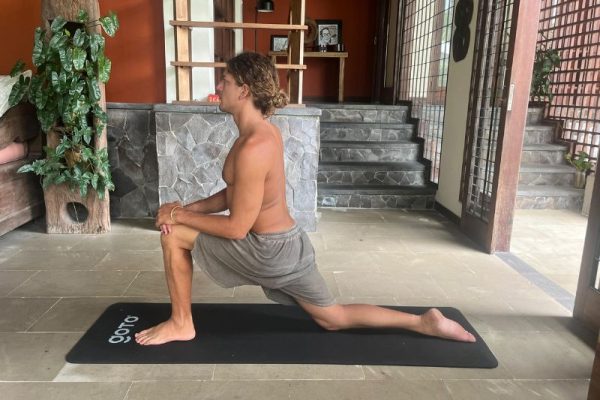
- Low Lunge: Activates the hip flexors, strengthens the muscles surrounding the thighs and knees, thus increasing power in turns, stability, and balance.
- Pigeon Pose: This pose targets hip release. It feels especially good after surfing long waves for an extended period of time, and can increase your range of motion in your pop-up.

- Chair Pose: Works on leg strength and stability.

Core & Balance
- Plank: Targets core strength, essential for paddling, pop-ups, turns, and overall strength and stability.

- Side Plank: Works the obliques and provides more rotational control in the water.

- Warrior III: Increases your balance in the water, and with board control, hopefully leading to fewer wipeouts and more fun!

Spine & Recovery
- Cat-Cow: Mobilises the spine. This is an important part of the body to protect and nurture in everyday activities, but especially in surfing, where so many twists occur, as well as back tension when paddling for long amounts of time.


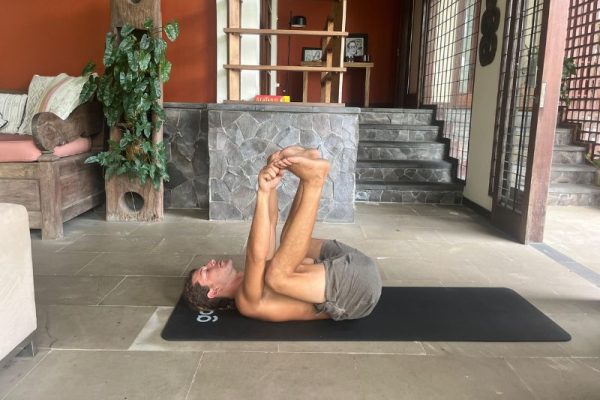
- Happy Baby: Opens up the hips and stretches the inner thighs. These are parts of the body that often get tight when surfing. This pose also mimics knee to chest compression, increasing your range of motion for pop-ups and manoeuvres. It also releases lower back tension and decompresses the lumbar spine, easing stiffness and fatigue after long paddles.
- Child’s Pose: This is the best pose for full-body recovery. It releases lower back tension, and calms the nervous system, providing a space for mental and physical reset.

Tips for Making Yoga Stick as a Surfer
As a surfer myself, I know how hard it is to prioritise anything other than surfing when it comes to exercise and fun. Thus, these are some ways that have helped me incorporate yoga into my life that can hopefully help you too.
- Keep yoga sessions short and practical. Write down the poses or parts of your body that you want to target and plan the flows that you are going to do within a set amount of time.
- Pair yoga with surf sessions. Account for 10-15 minutes pre and/or post surf where you dedicate to a short yoga practice.
- Use apps or YouTube to find surf-specific flows. There are tons of resources out there that have been curated to target surf-specific muscle groups. I found that if I know that I am doing yoga to improve my surfing, I feel more motivated to do it.
Yoga: Surf Longer and Stronger
Practicing yoga is a long-term investment for your digital nomad surf life. Incorporating this practice into your day-to-day activities will yield better performance, fewer injuries, and faster recovery in surfing and other physical activities by improving balance, strength, flexibility, and flow.
Start simple and stay consistent; you’ll see the benefits.
-> Read our top tips for self-care as a digital nomad surfer