

If you’re dreaming of escaping the 9-to-5 to chase swells and work remotely, you’re not alone. This is the story of how one surfer built his entire life around the ocean, with the best remote work destination being the key.
The two biggest takeaways from Jan’s journey are:
- A portfolio is your passport: Having a strong, self-built project (like a Surf Guide) is the most powerful tool for landing your first freelance remote work clients.
- Da Nang, Vietnam is a top-tier digital nomad surf spot: The combination of affordable living, reliable Wi-Fi, and consistent, uncrowded waves makes it an ultimate base for location-independent surfers.
Why I Chose This Life: Freedom and Waves
Ever since I left Germany and started traveling, I knew I didn’t just want to see the world—I wanted to live it. I wanted freedom, new challenges, new cultures, new faces, and the feeling of waking up somewhere different every few months.
A close friend kept talking about surfing—how it changes your life and what it feels like to ride your first wave. As a skater, it instantly clicked with me. When I finally tried surfing for the first time, I was hooked. One session was all it took.

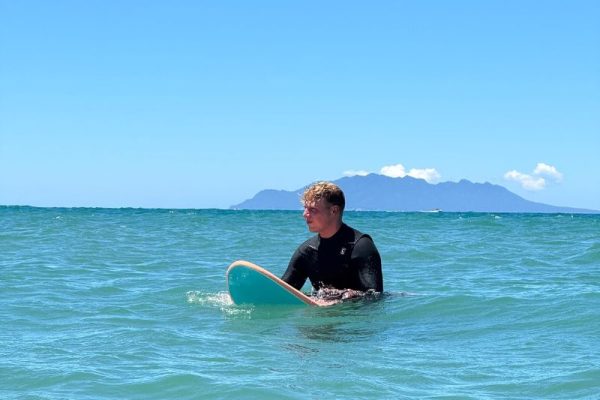
Since then, every place I travel to has to have waves. I’ve chased swells across the U.S., Costa Rica, New Zealand, South Africa, and Vietnam. Surfing became more than a sport. It turned into my compass. It taught me patience, rhythm, and how real progress takes time—both in the water and in work.
Now, I wake up early and feel genuinely excited to start the day. Surfing taught me discipline that consistency and small steps build big results. It shaped not only how I surf, but how I work, plan, and live.
Surf When It’s Firing, Work When It’s Flat
Getting Started as a Freelancer
When I first started freelancing, I had no clients, no reviews, and no idea where to begin. My Surf Guide for New Zealand became my turning point. It was the first project I built completely on my own, and it showed potential clients what I could do. That guide became my portfolio and helped me land my first real remote jobs online.
Most of my early clients came through Upwork and personal connections I made while traveling. Friends I met in New Zealand and Southeast Asia later connected me with small businesses looking for help with social media, SEO, or content creation—from surf schools/shops to travel brands. Once I had a few results to show, more work started to flow naturally.
Balancing My Remote Work Portfolio Today
Today, I manage social media for a safari company, run my own surf-focused Instagram page to promote my New Zealand Surf Guide, and edit travel videos for a remote client. The variety keeps me creative and motivated. I enjoy the freedom to choose the projects I take on and decide how long I want to work with each client—if something no longer feels right, I can simply move on.
On average, I work around 30 hours a week, spread over five to six days and at least one day off from work. I start my workday later. Most days, I begin around 10–11 a.m. and focus on client work or content projects until mid-afternoon. Because of the time difference with most clients, I usually take calls in the evening after sunset. It’s normally one or two per week, and after each one I take quick notes about what we discussed so I can plan my next day effectively.
I use Notion to organize my week and Clockify to track my hours. Clockify comes in handy both for personal tracking and for a few client projects where I need to report hours.
My schedule stays flexible—if the waves are firing in the morning, I surf first and work later. That’s the beauty of this lifestyle: you still get everything done, just on your own terms.
The Best Nomad Surf Town: Da Nang, Vietnam 🇻🇳
For me, Da Nang is the ultimate surf-and-work destination. From September to April, consistent swells roll in along My Khe Beach, offering mellow waves perfect for improving your skills. It’s a beginner-friendly beach break but also great for intermediate surfers. On weekends, I often ride my scooter 20 minutes south to Non Nuoc Beach for slightly bigger sets and fewer people. The lineups are still uncrowded, giving you plenty of space to experiment, try new boards, and progress without pressure. Not far from the city, there are also reef breaks, but I haven’t checked them out yet.
Incredibly Low Cost of Living for Digital Nomads
The city is one of the most affordable places in the world to live. You can rent a one-bedroom studio near the beach for around $US 300–400 a month and eat incredible local meals for just $US 1–3. I rarely cook at home—maybe once a week—because eating out is so cheap and convenient that it becomes part of the lifestyle. From tiny local spots serving fresh pho or banh mi to beachside cafés with ocean views, you can eat healthy and well every day without spending much. I usually have three meals a day.
Surf gear in Da Nang is also very affordable. You can rent a board for $US 5–10 per day, or get a monthly deal for $US 80–100. Buying a decent secondhand board costs around $US 150–200, and the small but growing surf community often trades boards and gear, making it easy to find great deals and connect with other surfers. You can easily find wax and zinc at almost every corner along the beach for around $US 3–5.
Fast Wi-Fi and Co-working Near the Waves
Wi-Fi in Da Nang is fast and reliable. I usually get around 100–150 Mbps at cafés or co-working spaces like Roots Plant-Based Café or Voi’s Kitchen, both just minutes from the beach. You can literally finish a client call, close your laptop, and be in the water ten minutes later.

How Much It Really Costs to Surf and Work in Da Nang
You can live comfortably in Da Nang for around $US 700–800 a month, depending on your lifestyle. Here’s what that roughly looks like:
- Rent (private studio near the beach): $US 300–400
- Food: $US 200–250 (three local meals a day at $US 1–3 each)
- Surfing: $US 80–100 (monthly board rental or maintenance)
- Visa: $US 25 (for a 90-day tourist visa; stays up to 45 days are free)
- Transportation: $US 30–40 (mainly Grab scooter rides)
- Utilities & extras: $US 50–70
If you stick to Vietnamese food and local life instead of western restaurants, it’s incredibly easy to live well without overspending. You can surf almost every day, work productively, and still have enough left to enjoy the good things like a post-surf smoothie or a weekend trip up to Hoi An.
Da Nang lets you live by the ocean, work remotely, meet plenty of digital nomads, and enjoy a quality of life that’s hard to match anywhere else.
My Surf-Work Balance: Chasing the Golden Hour
I always start my day early with a surf session before breakfast. It’s the best way to wake up, clear my mind, and get energy for the day. After that, I work for a few hours while the sun is strong—when it’s too hot to be outside. The sun in Vietnam can be brutal around midday, and you burn fast on the water, so it’s the perfect time to focus on work instead.
In the late afternoon or early evening, I paddle out again when the light gets softer, and the wind usually drops. Those golden-hour sessions are magic—fewer people, glassy waves, and the perfect way to end a productive day.
When the surf’s flat, there’s still plenty to do. Da Nang has a vibrant café and bar scene, beautiful viewpoints, local markets, and friendly locals. Sometimes I just grab a coconut, play pool with friends, or explore the mountains nearby.
After surfing, I like to finish the day with a good dinner and go to bed early to catch the next morning’s waves. It’s a simple rhythm, but it’s exactly the balance I always dreamed of—surf, work, eat, sleep, repeat.
Lessons I Had to Learn: Consistency is Key
The motivation to live this lifestyle was always there—to work from anywhere, live close to the ocean, and surf whenever possible. But the beginning wasn’t easy. There were months when I barely earned anything, sent out dozens of messages to potential clients, and often doubted if I could really make it work.
It took me about four to five months to build a steady income—not much at first, but enough to live comfortably in a cheap place like Vietnam. My first few projects came through connections and small Upwork jobs, and after delivering good results, word of mouth slowly started to help.
Still, there were setbacks. Sometimes clients canceled last minute or payments arrived late. A few times, I spent hours on a test project that didn’t lead anywhere. Those moments really test your patience and confidence, especially when you’re still figuring things out.
Time Management When Life is On Your Own Terms
One lesson I learned the hard way was not to push tasks off for “later.” Once, I postponed a video editing project because the waves were too good for three days in a row. It felt great in the moment until I spent two nights catching up, completely exhausted. Since then, I’ve made a rule: finish what’s due before paddling out. The waves will always be there tomorrow.
My best trick for staying consistent is time blocking. I schedule my work and surf sessions like meetings—both are non-negotiable. When I’m working, I give it 100%. When I’m surfing, I leave everything else behind. That balance keeps me productive, calm, and genuinely happy.
Ready to start your own journey? Check out our other articles on finding remote work ideas or the best surf destinations for remote workers.
About the Author

Jan Beecht
Surfing wasn’t part of my life until I left Germany to explore the world. Somewhere along the way, the ocean caught me—and never let go. These days I live as a digital nomad, chasing dreams, playing guitar, telling stories, and surfing with a healthy addiction. I’ve surfed J-Bay in South Africa, Hawai‘i, and many other countries. I’ve never felt the need to settle down—just to keep my business running and keep searching for the best waves in the world.
See more of my work @ blue.ocean.surf