


Key Points:
- Mount Maunganui offers a relaxed lifestyle, accessible surf, and easy city amenities for digital nomads.
- Raglan provides a raw, authentic surf culture ideal for focused, advanced surfers.
- Both locations are top contenders for surfing and working remotely in New Zealand.
First Impressions: Two New Zealand Surf Towns, One Ocean
I landed in New Zealand in March 2024 with nothing more than a confirmed job on a kiwifruit farm and the vague hope that I’d still be able to surf somewhere nearby. This journey was, for me, the start of surfing and working remotely in New Zealand.
The farm was in Te Puke, about twenty minutes from Mount Maunganui. Back then I’d only been surfing for two months. The only thing I really checked before arriving was whether you could surf close to where I was going. When I realized the Mount was just around the corner, it quietly shifted something for me.
The Magic of Surf Road: Finding Comfort at The Mount
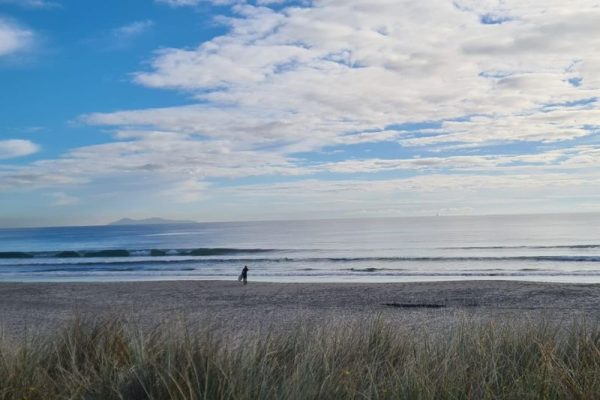
Before even showing up for my first day on the farm, the ocean called. I drove straight to check out the spot. The road leading there was literally called Surf Road, a sign that felt almost spiritual, confirming I was exactly where I needed to be.
My first session at the Mount felt unreal – not necessarily due to world-class wave perfection, but because of the palpable energy and ease. The waves were soft, forgiving, and carried just enough power to feel exciting without any intimidation. They were the ideal confidence booster for a beginner.
But what I remember most is sitting on my board between sets, looking at the ocean, the mountain, rising in the background, and feeling this strange sense of belonging. I’d only just arrived in New Zealand, but in that moment, I already felt comfortable. Almost home. That mix of salt air, early morning light, and local routine hit me fast. I enjoyed it immediately.
Raglan: The Whisper of Warning and the Rite of Passage
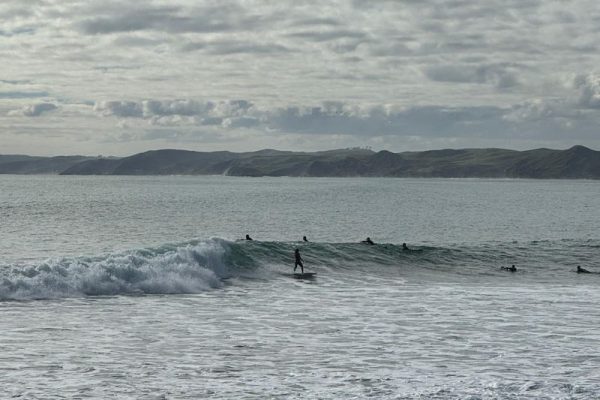
Raglan was a completely different story. Everyone at the farm who’d been in New Zealand longer or who actually surfed properly kept mentioning Raglan like it was some kind of rite of passage. I didn’t even know it ranked among the world’s top 20 surf spots until they told me. I was super stoked to head there – until someone added, “It’s reef and mostly for advanced to pros.” My excitement peaked and I went anyway, knowing that to truly understand the country’s surf culture, I had to see the legendary West Coast.
Arriving in the Pure Surf Enclave
When I arrived in Raglan, the reverence made perfect sense. Raglan doesn’t try to be a surf town – it is the very definition of one. Everything revolves around the surf.
You see it everywhere: surf shops, cafés with wetsuits perpetually drying outside, and people constantly scanning the horizon while ordering coffee.
I drove straight to the famous Manu Bay. A line-up full of committed surfers. I didn’t paddle out that day; I just watched. The kids were insane. Pure talent, total confidence. I remember thinking how wild it would be to grow up there – surrounded by that level of surfing, in that kind of energy. The next day I surfed Ngarunui Beach. Still more powerful than the Mount. West Coast swells hit harder – challenging but manageable for me at the time. Even though paddling out felt unfamiliar and noticeably more demanding, it was a completely different kind of surf experience than anything I’d had up to that point.

Lifestyle & Community – Navigating the Surf Ecosystem
The Vibrant Flow of Mt. Maunganui
The lifestyle at Mt Maunganui feels noticeably different from many dedicated, isolated surf towns I’ve experienced. While places like Raglan lean into a quiet, focused vibe, “The Mount” attracts a dynamic mix of backpackers, young travelers, and surf enthusiasts. The appeal lies not just in the waves but also in the town’s inherent, easygoing energy.
Evenings tend to come alive. The bars, pubs, and small clubs along the main street fill up, creating a consistent social buzz that naturally fosters a sense of connection. Whether it’s a live DJ, a casual event, or simply a sunset gathering on the beach with a cold drink, there’s always a reason to come together.
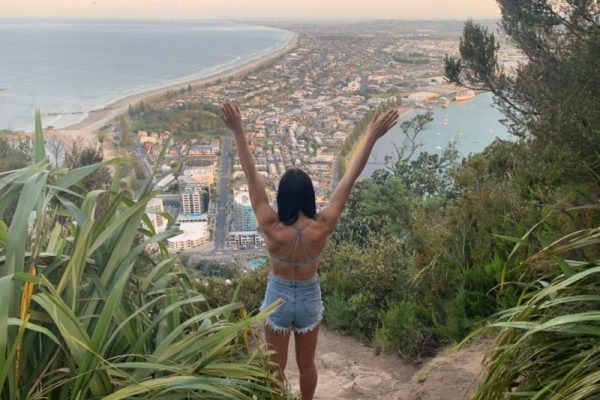
Plenty of travelers come to Mt Maunganui just to hike the mountain that sits right by the ocean. The climb itself isn’t long, and the view is worth every step. Especially from the lower part of the trail, you can clearly watch the surfers and waves below.
From the top, you get not only a panoramic view of the coastline but can often see surfers lining up like tiny silhouettes moving along the swell. It’s one of those rare places where you feel torn between wanting to be out there surfing and just sitting back watching it all unfold.
Community, Inclusion, and Surf Etiquette
The community in the water at Mount Maunganui is genuinely welcoming and respectful. Whether you’ve just started surfing or you know how to read the ocean, the Mount makes it easy to feel included. Thanks to the long stretch of beach and the numerous naturally forming peaks, there’s always enough room to find your own spot in the line-up. If you display respect and follow basic surf etiquette, locals are quick to share waves. I never once felt pushed out or judged.
It’s also surprisingly easy to connect with people there. Out in the water, you’re often greeted with a quick nod or a casual “how’s your session?” – and conversations with other surfers start naturally between sets. There’s no real ego in the lineup, more a shared appreciation of being in the ocean with that view of the mountain in the background. Some of my best interactions happened while sitting on my board, waiting for the next set.
Surf Accessibility
The accessibility is key for anyone living the surf and remote work lifestyle. With countless surf schools, board rentals, and coaching options scattered along the beach, Mt Maunganui is an exceptionally popular spot for beginners. Yet, it’s far from exclusively a learner’s playground—you’ll meet plenty of experienced travelers who came for a week and ended up staying months.
Most of them share one of the unique experiences of surf nomads: life here feels like a pleasant, easy-going bubble where days blend into each other, and things simply flow with ease. For those who need structured learning, the South Pacific Surf school is highly recommended.

Raglan: A Culture Built on Dedication and Focus
Compared to the Mount, Raglan carries a different, more dedicated energy. The town attracts mostly long-term travelers and serious surfers who structure their daily routine entirely around the tides and the swell forecast.
Nightlife is strictly secondary here. What truly drives Raglan is the surf—and you feel that singular focus immediately. Most people are up before sunrise, striving to be the first in the water, and conversations predominantly revolve around swell directions and wind shifts.
This deep-seated mindset is most obvious at Manu Bay, the famous left-hand pointbreak. The line-up is almost always saturated, and everyone is hyper-focused on scoring as many waves as possible. It can feel intense at times, especially for less experienced surfers, and there’s an extra layer of risk due to the reef structure. Even getting into the water at Manu Bay can be technical, but with patience and the right timing, it’s achievable, even if you are not highly advanced.
Despite the intensity and occasional competitiveness, Raglan possesses an incredibly strong, authentic surf spirit. Once you are there, you automatically become a part of the community. People welcome you with open arms, provided you respect the etiquette. If Manu Bay proves overwhelming, Ngarunui Beach just down the coast offers a more forgiving alternative. It’s a great spot for intermediates who want to keep progressing while still catching solid waves, with enough space to stay clear of other surfers. A few surf schools operate from there too, creating a more relaxed and supportive environment.
Overall, Raglan feels like a place where life is not just near the ocean, but revolves around it. It’s raw, authentic, and singularly focused – if Mt Maunganui feels like a bubble where life flows easily, then Raglan feels like a powerful pulse driven entirely by the next swell.

Logistics & Accessibility – Cost, Accommodation, and Infrastructure
The Price of Remoteness vs. Urban Access
From my experience, Raglan tends to be slightly more expensive than Mount Maunganui, primarily due to its remote location. The town sits off the main route, with only one road leading down to the coast and no major urban area nearby. While the road is well maintained, everyday costs, especially groceries, are noticeably higher in Raglan due to logistics and lack of competition.
In comparison, Mount Maunganui benefits immensely from being directly connected to Tauranga Harbour, one of New Zealand’s fastest-growing cities. With several large grocery stores nearby and easy access, prices tend to stay more competitive. The wider area around Tauranga and the Mount is significantly better developed, with fast access via highways and well-maintained roads from almost any direction.
When it comes to accommodation, my view is limited to my experience living out of a van during my time in New Zealand. Around Mount Maunganui, several freedom campgrounds allowed overnight parking without charge near the beach, which made vanlife simple and highly cost-effective. In contrast, Raglan offered only one official campground suitable for campervans near the main surf spots. It was meticulously clean and well maintained, but the overnight fee of around 15 NZD added costs over time for the budget traveler.
Infrastructure for Those Who Work Remotely and Surf
Mount Maunganui clearly stands out in terms of accessibility and general infrastructure. Being closely linked to Tauranga, the area provides a wide range of amenities, efficient transport connections, and easy access to essential services. Whether you arrive by car, bus, or are actively looking for work, you’ll find it simple to settle in and maintain a routine that allows you to work remotely and surf easily.
Raglan, on the other hand, feels wonderfully isolated – which is precisely what many people cherish about it. This remoteness contributes to its authentic, untainted surf-town vibe and helps maintain the unwavering focus on surfing and nature.
However, for those requiring frequent travel, reliable Wi-Fi, co-working spaces, or urban support, that isolation translates to fewer options in terms of transport, logistics, and general urban convenience.
Final Thoughts: Choosing the Best Surf Spot in NZ as a Digital Nomad
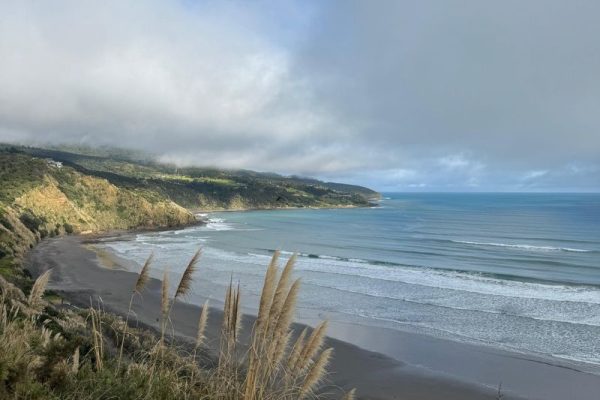
Both Raglan and Mount Maunganui offer incredible surf experiences and unique lifestyles. With only a 2–3 hour scenic drive separating them, it’s surprisingly easy to explore both destinations in a single trip, offering a comprehensive view of New Zealand’s surf culture.
Raglan draws you in with its pure, undiluted surf energy, raw nature, and the undeniable challenge of its powerful waves. Mount Maunganui wins you over with accessible, fun surf, a pervasive and welcoming sense of community, and the general feeling that life moves just a little easier there.
And while I genuinely appreciate both places immensely for their contrasting but powerful reasons, if I had to choose one to call my home it would unequivocally be Mount Maunganui.
After living nine months surfing and working remotely on the nearby kiwi farm and spending almost every day in the Mount line-up, the place naturally became my anchor. There’s a specific magic about catching a wave there, with the iconic view of the mountain anchoring the horizon, that simply makes sense to me.
Ready to pack your board bag? Check out our guide on Top Surf Destinations for Remote Workers to see how NZ compares to the rest of the world.